

This Sunday’s Readings
First Reading: Proverbs 31:10–13, 19–20, 30–31: She does her work with eager hands and holds out her hand to the poor. Psalm: Psalm 127(128):1–5: O blessed are those who fear the Lord. Second Reading: 1 Thessalonians 5:1–6: The Day of the Lord will come like a thief in the night; stay wide awake and sober. Gospel: Matthew 25:14–30: The master entrusts his property to his servants and returns to go through his accounts.
This Week’s Gospel
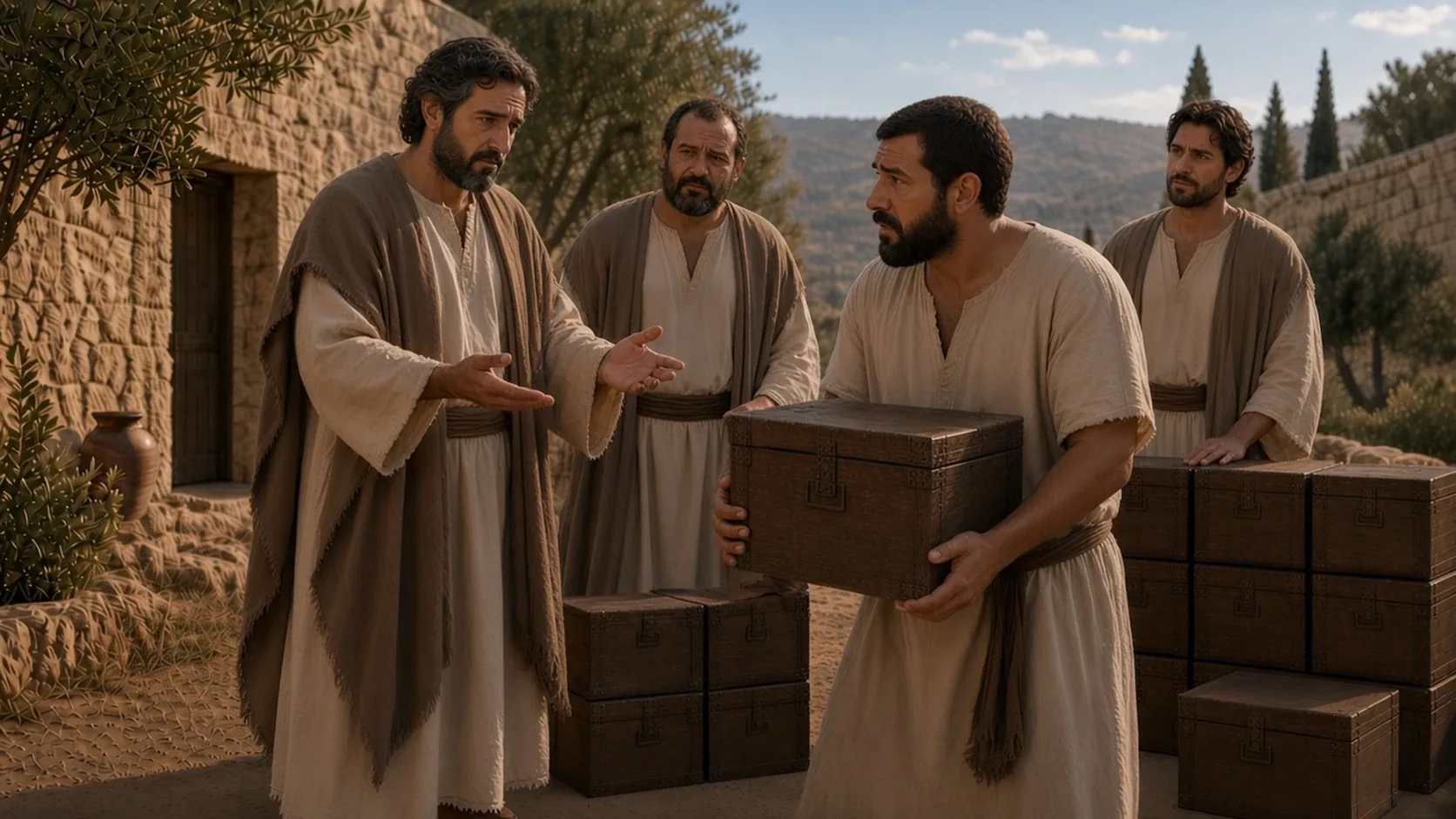
As the Church’s year draws to a close, the Gospels turn our minds to the return of Christ. Jesus tells of a master who goes abroad and, “a long time after”, comes back to go through his accounts with his servants. Two of them have doubled what he gave them. The third hands back exactly what he received, and before he hands it over he explains himself: “Sir, I had heard you were a hard man … so I was afraid, and I went off and hid your talent in the ground.” Listen to the order of his words. He had heard something about his master; what he heard made him afraid; and his fear made him bury the gift. Everything he failed to do began with what he believed about the one who had trusted him. It began with a fear which took root in his heart.
A talent was a huge sum, many years’ wages for a working man. The master placed his own property in his servants’ hands, “each in proportion to his ability”, and then he went away and left them free to use it. When he returns, he says the same words to both faithful servants: “Well done, good and faithful servant; you have shown you can be trusted in small things, I will trust you with greater; come and join in your master’s happiness.” The man with two talents hears exactly what the man with five hears, because the master measures each servant by what he was given and asks only that he be faithful with it. And the reward far outweighs the work. He calls five talents “small things”, and in return he gives a share in his own happiness.
In this parable Jesus is telling us about Himself. He has entrusted us with His own life. He gave us grace at our baptism, He gave us faith, and the Holy Spirit pours God’s love into our hearts. Along with these He has given each of us our natural abilities. All these gifts are like the master’s money: they are meant to grow, and they grow when we use them. We use them each time we pray, each time we choose Him over ourselves, each time we love our neighbour for His sake, and each time we put our abilities to work in His service.
The third servant thought burying the talent was the safe choice. Yet his caution came from fear, and his fear came from a false picture of his master. We can carry the same picture of God: a God who waits to catch us out, who demands more than we can give, whom it is safer to keep at a distance. This is one of the devil’s oldest tricks. In the Garden of Eden he persuaded Adam and Eve that their Creator was holding something back from them, and once they distrusted Him, they were afraid of Him. When God came looking for Adam, he said: “I was afraid … so I hid.” The third servant says almost the same words: “I was afraid, and I went off and hid your talent.” The devil still works this way, using fear to put a barrier between us and the love of God. If God is so demanding that nothing we offer could ever please Him, it seems modest to attempt nothing and keep out of His way. But whoever thinks like that stops using what he has been given. He prays less, because he expects only judgement; he risks nothing for God, because he expects only to fail. And so the gift that was meant to grow lies buried, just like the talent. That is why the master says: “For to everyone who has will be given more, and he will have more than enough; but from the man who has not, even what he has will be taken away.”
The answer to that fear is to know our Master as He truly is, and we learn who He is from what He has done. The Son of God became one of us. He went looking for sinners, sat at their tables and forgave them. He touched lepers, healed the sick and raised the dead. Then, while we were still sinners, He gave His life for us on the cross, and He prayed for the very men who were putting Him to death. He rose from the dead and sent us His Holy Spirit, so that His own life could live in us, and He gives Himself to us still at every Mass. A master who wanted to catch us out would never have paid such a price for us. The One who has given His life for us can be trusted with ours.
When we receive Christ in Holy Communion, He gives us the greatest gift, which is Himself. We can receive Him as servants He has trusted, and let His grace grow in us, so that when He comes again we may hear Him say: “Well done, good and faithful servant … come and join in your master’s happiness.”
How the Readings Fit Together
The psalm sung today blesses those who fear the Lord and walk in His ways. That fear is the reverence of people who know Him, and it sends them out along His paths, towards a blessing that reaches their work, their home and their whole life. The third servant was afraid as well, yet his fear came from a false report of his master, and it stopped him in his tracks. The psalm helps us tell these two fears apart. Those who know the Lord are drawn towards Him; they walk, and they are blessed. The fear that buries the talent is the fear of a God we have not yet learned to trust.
Saint Paul writes to the Thessalonians about the same return that the parable describes. “The Day of the Lord is going to come like a thief in the night,” he says, and he tells them to “stay wide awake and sober.” They can stay awake like this because they already belong to the One who is coming: “you are all sons of light and sons of the day.” The Day will come suddenly, but it need not overtake them as it overtakes a stranger. They wait as people who know their Lord. That is the trust the Gospel asks of us while the Master is away.
A Word from the Saints
Saint John Henry Newman saw that each of us has been given a work that no one else can do in our place. God has entrusted us with so much because He loves us, and so we have nothing to fear. In one of his meditations he writes:
“God has created me to do Him some definite service; He has committed some work to me which He has not committed to another. I have my mission—I never may know it in this life, but I shall be told it in the next… He has not created me for naught. I shall do good, I shall do His work… Therefore I will trust Him. Whatever, wherever I am, I can never be thrown away… He does nothing in vain… He knows what He is about.”
Meditations and Devotions, “Hope in God, Creator”, 7 March 1848
A Question for Reflection
What picture of God am I carrying, and how is that picture shaping what I do with what He has entrusted to me?
Next Sunday
Our Lord Jesus Christ, King of the Universe, Year A, 22 November 2026
Ezekiel 34:11–12, 15–17; Psalm 22(23):1–3a, 5–6; 1 Corinthians 15:20–26, 28; Matthew 25:31–46.
When the Son of Man comes in His glory, He will separate the nations as a shepherd separates sheep from goats. Mercy shown to the least of His brothers is mercy shown to Him.