

This Sunday’s Readings
First Reading: Wisdom 6:12–16 — Wisdom is found by those who seek her.
Psalm: Psalm 62(63):2–8 — The soul longs for God.
Second Reading: 1 Thessalonians 4:13–18 — Those who have died in Christ will rise to be with him.
Gospel: Matthew 25:1–13 — The bridesmaids await the bridegroom.
This Week’s Gospel
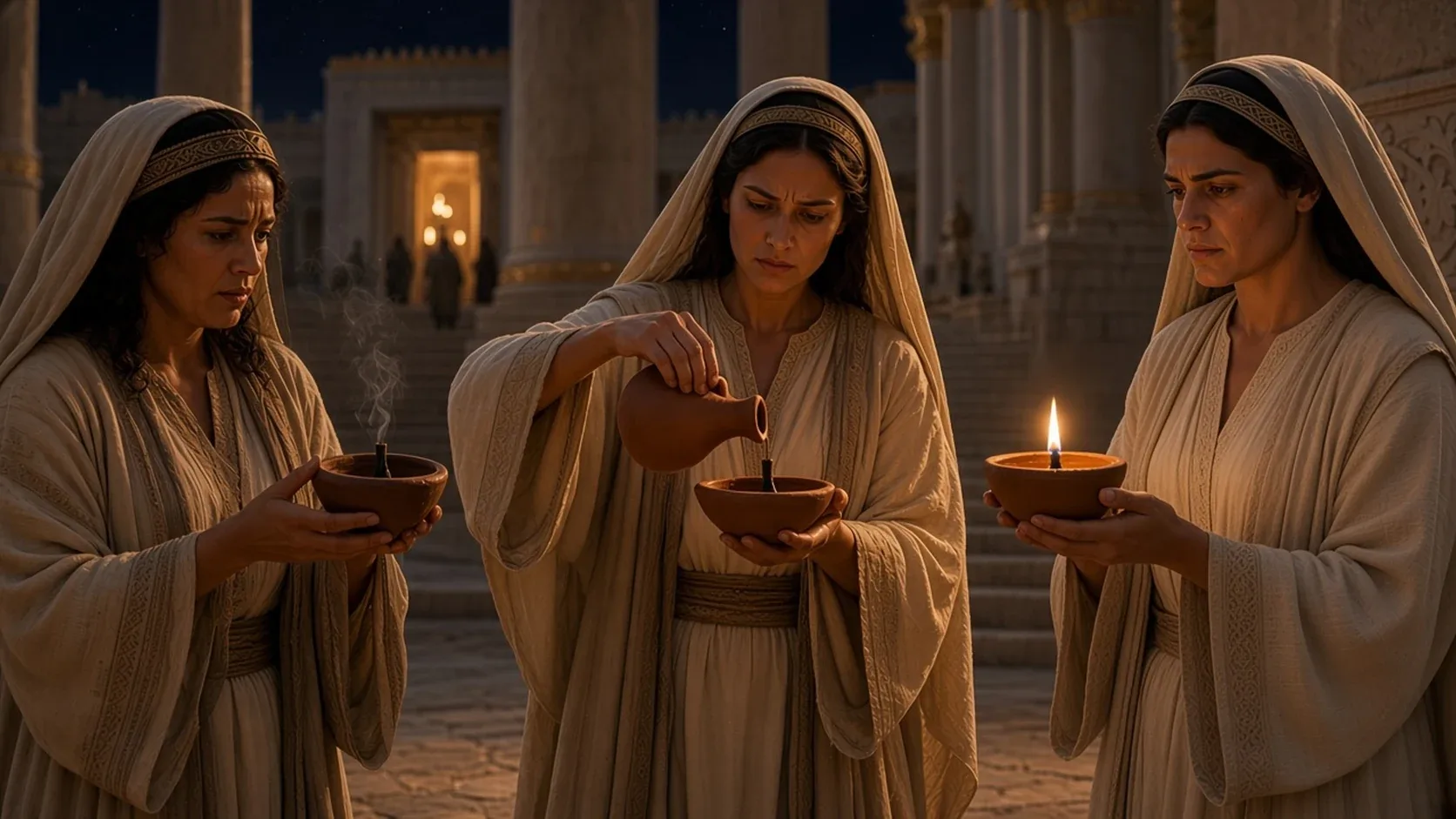
All ten young women in the parable fell asleep. The wise were no more watchful than the foolish; when the bridegroom was late, every one of them grew drowsy and slept. Yet when the cry went up at midnight, five were ready and five were not, and the Gospel tells us what followed: “Those who were ready went in with him to the wedding hall.” Whatever made the difference was not decided at midnight. It had been decided before any of them lay down.
The difference was oil. The foolish had their lamps, but when they woke those lamps were going out; the wise had brought flasks of oil as well. For centuries Christians have seen in that oil the gift of charity, the love the Holy Spirit pours into our hearts. It lets us share in God’s own life, and it makes us able to love him above everything and to love our neighbour for his sake. In other words, charity is friendship with God. We could never earn that friendship to begin with; God gives it freely, first in baptism. Then, by his grace, we can answer him with a love that is truly our own, and that love grows as we live it.
When the foolish ask for some oil, the wise refuse, afraid there will not be enough for both. But the love this oil stands for is something none of us can hand over to another: our love for God.
We can help one another towards God, and our prayers can obtain the grace by which another person turns to him. But that person’s response must be their own. No one else can give God the love he asks of each of us.
That is why the bridegroom’s reply is so serious: “I tell you solemnly, I do not know you.” The closed door helps us see what it would mean to come before Christ as a stranger, without his friendship. The five who went in were known to him because they had welcomed his love and given their love in return, and now they were going in to share his life.
Jesus ends the parable by telling his disciples to stay awake, because they do not know the day or the hour. All ten slept, so the watchfulness he asks for must go deeper than keeping our eyes open. It means turning to him with the love we might be inclined to leave until later, because none of us can be sure of tomorrow.
And if serious sin has broken our friendship with God, he has not withdrawn his invitation. When we repent and come to the sacrament of Penance, he gives back the charity we have lost. The warning about the closed door is spoken to us while the door is still open.
When we receive Christ in Holy Communion in a state of grace, he strengthens the charity he has given us and draws us closer to himself. In this sacrament he nourishes the love with which we hope to welcome him when he comes.
How the Readings Fit Together
The Gospel tells us to be ready for Christ’s coming, and Saint Paul helps us see why we can look forward to it with hope. The Thessalonians fear that Christians who have died will miss the Lord’s return, so Paul points them to Jesus’ death and Resurrection: those who have died in Christ will rise to meet him. Paul gives us the Lord’s promise: “So we shall stay with the Lord for ever.” The wedding feast in the Gospel expresses this same joy of being with Christ. Readiness matters because we are preparing to meet him and share his life for ever.
The psalm shows how the desire for that meeting can grow within us. The psalmist longs for God as a thirsty body longs for water, drawn by the love he has already known and found better than life itself. Just as his experience of God’s goodness makes him long for more, our love for Christ now deepens our longing to be with him. The Gospel’s call to be ready thus asks us to nurture the friendship that will find its fulfilment when we meet him.
A Word from the Saints
Saint Augustine sees the oil as God’s gift of charity, poured into our hearts by the Holy Spirit. Through this gift we share in God’s own life and love, and are enabled to love him and our neighbour. His grace moves us to receive this gift and respond freely, but we cannot create it in ourselves or place it in another person’s heart. God alone can give it.
“There is the oil, the precious oil; this oil is of the gift of God. Men can put oil into their vessels, but they cannot create the olive.”
— Saint Augustine, Sermon 93, section 9 (Sermon 43 on the New Testament in the English collection).
A Question for Reflection
What answer to Christ am I putting off, as though I could be certain of another day in which to give it?
Next Sunday
Thirty-Third Sunday in Ordinary Time, Year A — 15 November 2026
Proverbs 31:10–13, 19–20, 30–31; Psalm 127(128):1–5; 1 Thessalonians 5:1–6; Matthew 25:14–30.
The parable of the talents continues Jesus’ teaching about his return. The servants must account for what they have done with the property their master entrusted to them.