

This Sunday's Readings
First Reading: Ezekiel 33:7-9: I will hold you responsible for his death
Psalm: Psalm 94:1-2, 6-7, 8-9: O that today you would listen to his voice! Harden not your hearts
Second Reading: Romans 13:8-10: Love is the answer to every one of the commandments
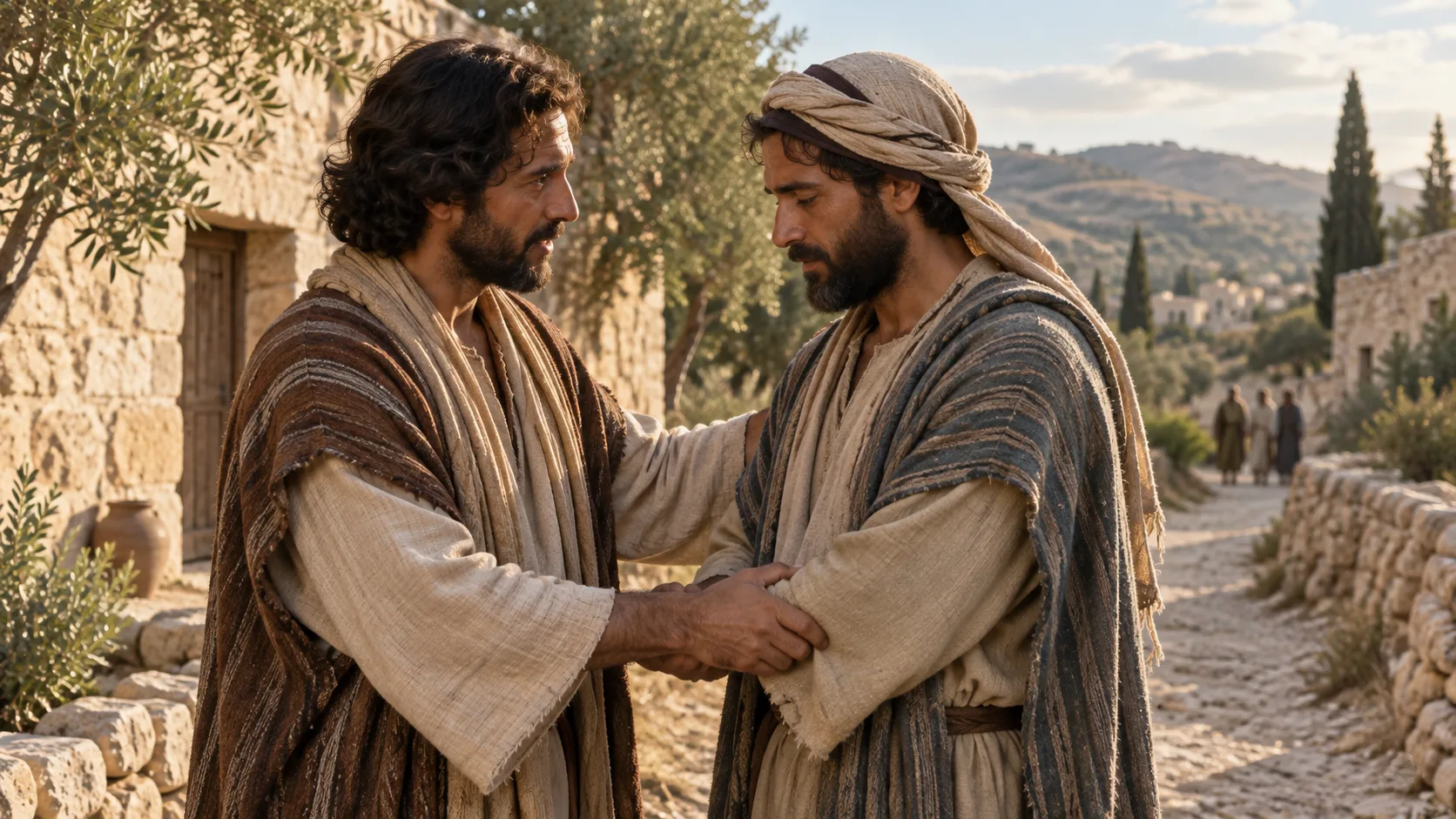
Gospel: Matthew 18:15-20: If your brother listens to you, you have won back your brother
This Week's Gospel
The passage sits between two related to it. Just before it, Jesus tells of the shepherd who leaves ninety-nine sheep on the hillside to go after the one that strayed, and He ends: it is never the will of your Father in heaven that one of these little ones should be lost. Just after it, Peter asks how often he must forgive his brother, and is told seventy-seven times. God wills that no one be lost, and we must forgive without limit. Today's Gospel deals with what lies between: how to reconcile with the one who has wronged you.
Jesus begins with what you are trying to achieve. If your brother listens to you, you have won back your brother. Getting even does not come into it, and neither do our own hurt feelings. The person who wronged you is in danger of being lost, and you go to him to get him back.
That is why the steps run the way they do. Each one widens the circle only as far as it must, to keep the matter small and to spare the person shame, because shame makes a man defend his sin. Even the last step, the one that feels like giving up, is the community's final attempt to help the person: if he or she feels the loss of fellowship, the hope is that they will repent.
How the Readings Fit Together
Ezekiel is appointed sentry to the House of Israel. If he hears a word from God and does not warn the wicked man to renounce his ways, the man dies for his sin, but God holds the sentry responsible for his death. That is the ground of the Gospel's first step. Keeping quiet is never the safe option. Leaving a brother in his sin is a failure of love that we answer for.
St Paul gives the reason the whole passage holds together. Avoid getting into debt, except the debt of mutual love. Love is the one thing that cannot hurt your neighbour; that is why it is the answer to every one of the commandments. Correction that comes from love seeks the good of the other and repairs what is broken. Correction that comes from hurt pride is something else, however well it is dressed up.
The first step is the hardest and the most important. It takes courage to speak to someone directly, calmly and gently, and in most cases that is all it takes. Going to other people first is detraction: it takes away a person's good name without giving them the chance to put things right, and it usually reaches their ears and ruins any hope of healing. Only when a private word has failed should others be involved, and then we have to be honest about our motives, because our own wounded pride can easily be driving us. The purpose is always to help the other person, never to vent or to make ourselves feel better by pointing out their fault to a third party.
The last step needs explaining, because "treat him like a pagan or a tax collector" sounds like the end of the road. In the early Church it was carried out exactly as Jesus describes. The matter was brought before the local community and its leaders, and someone who would not listen was put out of the assembly and kept from the Eucharist. St Paul told the Corinthians to do this with one of their own, and later told them to forgive and comfort the man when he repented, so that he would not be swallowed up by sorrow. Being put outside let him feel the loss of the community, since he had detached himself from the body of Christ, and that loss was a taste of the greatest loss of all, giving up friendship with God. The hope was that the loss would do what words could not and bring him back.
Exclusion from the Church through excommunication is for serious unrepented public sins, but in every case it is a response to the fact that the person has excluded him or herself from full communion.
Regardless of whether a person says sorry or repents, we must nonetheless forgive them the wrong they have done to us. Forgiving depends on each of us alone. Reconciliation takes two, and if the other person refuses, we are not bound to carry on as though nothing were wrong, but we go on praying for them and wanting their good. Remember how Our Lord Himself treated tax collectors: He ate with them, and He even called one of them to reform his life and to be an Apostle. Even the last step is about winning a brother or sister back.
And Jesus ends with prayer. Where two or three meet in His name, He is there. We can have a Mass offered for the person who has wronged us, and God, who alone can work within a soul, can bring about the change of heart that our words could not.
The Fathers on Sunday's Gospel
St Augustine preached on this Gospel and asked the question that settles everything: why do you rebuke him at all?
Why do you rebuke him? Because you are grieved that he has sinned against you? God forbid. If you do it from love of yourself, you do nothing. If you do it from love of him, you do excellently. Observe in the words themselves for whose sake you ought to do it: "If he shall hear you, you have gained your brother." Do it for his sake then, that you may gain him. If by doing it you gain him, then had you not done it, he would have been lost.
On the final step he adds that when the Lord while we reckon him no more among the number of our brethren, yet his salvation is not, on that account, to be neglected..... we still ever seek their salvation.
Sermon 82 (Sermon 32 in the older numbering), on Matthew 18:15
A Question for Reflection
Is there someone we have spoken about to others when we should have spoken to them, and what would it take to go to them this week, alone and with love?
Next Sunday
Twenty-Fourth Sunday in Ordinary Time, Year A: 13 September 2026
Ecclesiasticus 27:30-28:7; Psalm 102; Romans 14:7-9; Matthew 18:21-35.
"Not seven, I tell you, but seventy-seven times."